How to Watch Arabic TV in Australia
Free-to-air, broadcaster apps, satellite or IPTV? Every way to watch Arabic TV in Australia compared, with time-zone tips for news and Ramadan drama.
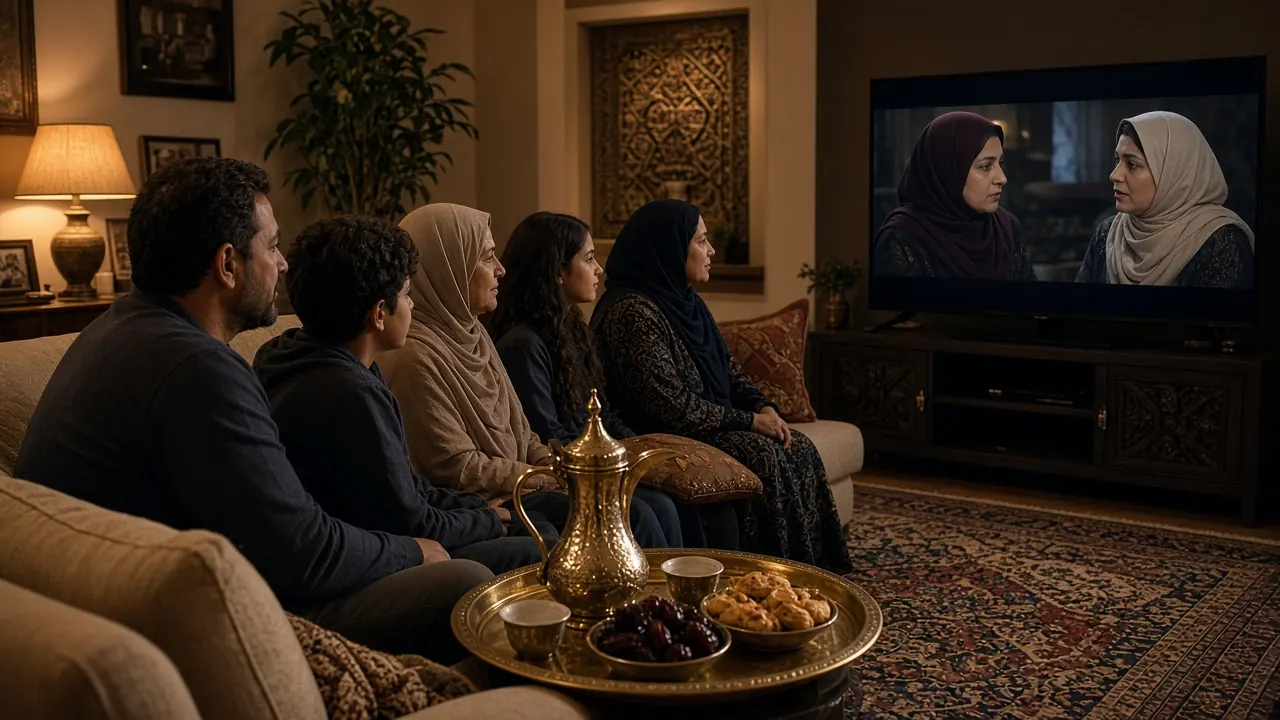
Australia is home to a large and long-established Arabic-speaking community, with families whose roots are in Lebanon, Iraq, Egypt, Syria, Jordan, Palestine, the Gulf and North Africa. For many of them, Arabic television is part of everyday life: the evening news from home, the series the whole family follows during Ramadan, cartoons that help children keep their Arabic, and live football.
Yet Arabic channels aren’t part of standard Australian TV packages. So what are your options? This guide compares the four realistic ways to watch Arabic TV in Australia, then covers the practical side: time differences, Ramadan viewing, children’s programming and setting things up for a multi-generational household.
Your options at a glance
| Option | What you get | Cost and effort | Best for |
|---|---|---|---|
| Free-to-air multicultural programming | Limited Arabic-language news and programmes | Free; just an antenna or the broadcaster’s app | Occasional viewing, local Arabic news |
| Broadcaster apps and international subscriptions | One network’s shows per app, often on demand | A subscription for each network | Following one or two networks closely |
| Satellite | Live channels from the satellite’s line-up | Dish, installation, ongoing fees | Homeowners happy with a fixed bouquet |
| IPTV | Live channels from across the Arab world plus on-demand, in one app | One subscription; set up in minutes | Families who watch several countries’ channels |
Option 1: Free-to-air multicultural programming
Australia’s multicultural public broadcasting includes some Arabic-language content, such as news and community programming. It’s free, official and easy to find, and it covers Australian news from an Arabic-speaking perspective, which many families value.
The limitation is scope. It isn’t designed to replace television from the Arab world, so you won’t find the range of drama, entertainment, children’s and sport channels that families are used to at home. Think of it as a useful extra rather than a complete solution.
Option 2: Broadcaster apps and international subscriptions
Several Arab broadcasters offer apps or international subscriptions, and some streaming services carry Arabic series and films. They’re official and usually work well on phones and Smart TVs.
The catch is fragmentation. Each app typically covers one broadcasting group, so a family that wants Gulf drama, Egyptian comedy, Levantine news and children’s cartoons might need several separate subscriptions — and still not have live sport. Some apps focus on on-demand episodes rather than live channels, and catalogues available outside the region can be narrower than at home. If your family follows one network and mostly watches catch-up, an app may be all you need.
Option 3: Satellite TV
Satellite was the traditional route for Arabic TV abroad, and some services have offered Arabic packages in Australia. It can deliver reliable live channels once it’s set up.
The drawbacks are practical. You’ll need a dish, professional installation and alignment, and usually a set-top box for each TV. Renters need landlord permission, apartments may restrict dishes, and heavy rain can interrupt the signal. You’re also limited to whatever channels that particular satellite package carries, with extra costs to add rooms.
Option 4: IPTV
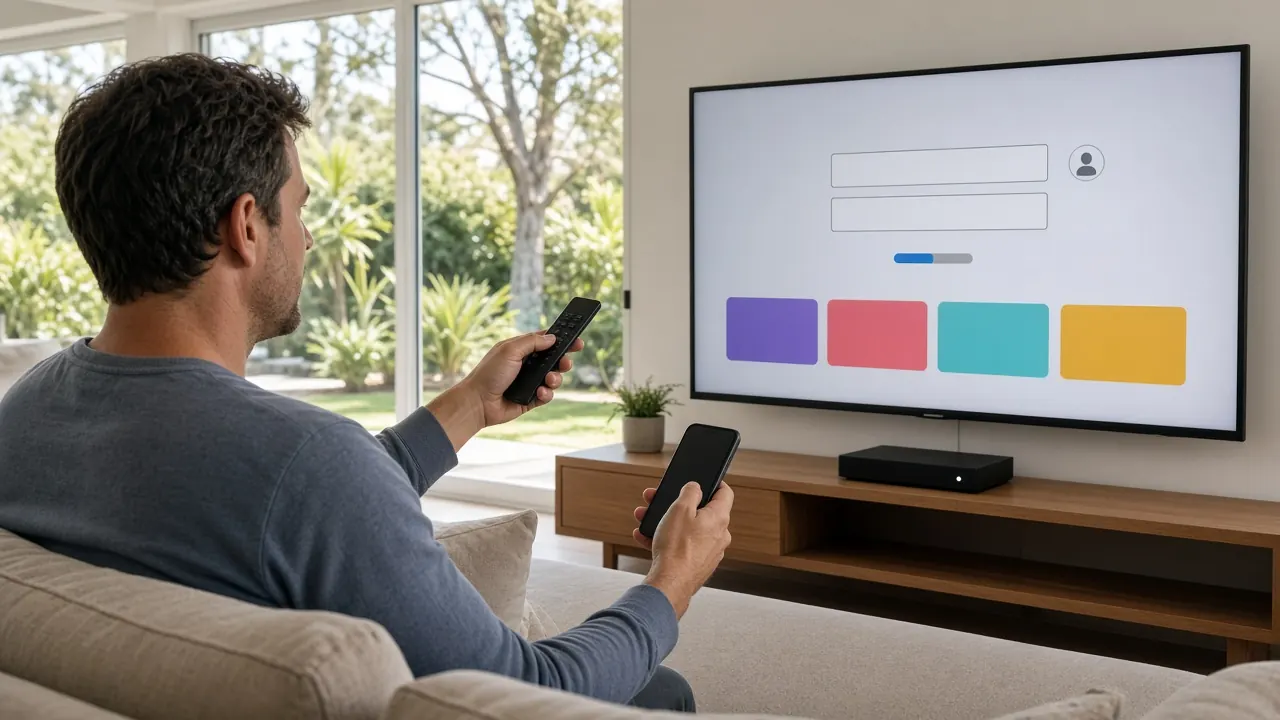
IPTV delivers live channels over your broadband connection. A single app on your Smart TV, box, phone or tablet shows a full guide of Arabic channels from the Gulf, Egypt, the Levant, Iraq and North Africa, alongside Australian and international channels and an on-demand library of Arabic films and series.
The advantages are breadth and flexibility: many countries’ channels in one place, no dish or installer, and plans that let several devices watch at the same time. The things to check are the quality of the service and its support — which is why the checklist at the end of this guide matters. To see how this works with our service, read about Arabic IPTV in Australia.
The time difference: when Arabic TV airs in Australia
Eastern Australia is well ahead of the Arab world, so prime time there is early morning here:
- The Gulf (Saudi Arabia, Kuwait, Qatar, Bahrain, Iraq — UTC+3): Sydney and Melbourne are 7 hours ahead in winter and 8 hours ahead during daylight saving. A 9:00 pm show in Riyadh airs at 4:00 or 5:00 am on the east coast and 2:00 am in Perth.
- The UAE and Oman (UTC+4): one hour less, so the same show airs an hour earlier in Australia.
- Egypt and the Levant: the same as the Gulf or an hour behind it, depending on the country and whether it’s on summer time.
- North Africa: Morocco and Algeria are around 9 to 10 hours behind the east coast, so their evening programmes reach Australia after sunrise.
Because clocks change on different dates in different countries, the easiest approach is to rely on your TV guide, which converts schedules into your local time automatically.
Planning your Ramadan viewing
Ramadan is the biggest month of the year for Arabic television, with new series premiering every night. From Australia, a little planning helps:
- Use catch-up. On supported channels, catch-up lets you watch the previous night’s episodes after iftar instead of waking before dawn.
- Check the guide early. Browse the schedule at the start of Ramadan and note which channels carry the series your family wants.
- Create a Ramadan favourites list so everyone can find the month’s series quickly.
- Plan for more screens. With relatives visiting and different generations watching different series, more devices may be playing at once than usual.
Ramadan moves about 11 days earlier each year, and over the next few years it falls during the Australian summer, when daylight saving widens the gap with the Gulf by an hour.
Arabic for the next generation
Parents often say children’s channels are the most valuable part of Arabic TV. Cartoons, educational shows and Arabic-dubbed programmes help children growing up in Australia keep listening to and speaking the language. Set up a separate favourites list on the children’s TV with just their channels, and use parental controls to hide everything else.
What internet speed do you need?
Live TV needs a stable connection more than a very fast one. As a guide, allow about 10 Mbps for each HD stream and 15–25 Mbps for Full HD. A household watching on three screens at once needs roughly 30–75 Mbps, which most fixed-line plans of 50 Mbps or more can manage. For the main TV, an Ethernet cable from the router gives the most reliable picture during live news and football.
Checklist before you subscribe
- Does it cover the countries you watch? Ask about specific countries, not just “Arabic channels”.
- Is catch-up included? With the time difference, it’s close to essential.
- Can several devices watch at once? Check how many and what extra devices cost.
- Which devices are supported? Make sure it works on the TV your family actually uses.
- How do you get support, and when? Look for help available in Australian hours, ideally 24/7.
- What currency are you charged in? If it’s not Australian dollars, check your bank’s foreign transaction fees.
- Are the terms and privacy policy published? A reputable service makes both easy to find.
The bottom line
Free-to-air programming is a good free extra, and a broadcaster app suits families who follow one network. But if your household watches channels from several Arab countries, wants live news and sport, and has more than one screen in use, IPTV is the simplest and most cost-effective way to bring Arabic TV into an Australian home.
Australia IPTV includes Arabic channels from across the Middle East and North Africa in every plan. Explore Arabic IPTV, choose hardware with our Arabic box TV guide, compare subscription plans for 1 to 5 devices, or visit the IPTV Australia homepage.